As an Amazon Associate I earn from qualifying purchases. Read our affiliate disclosure.
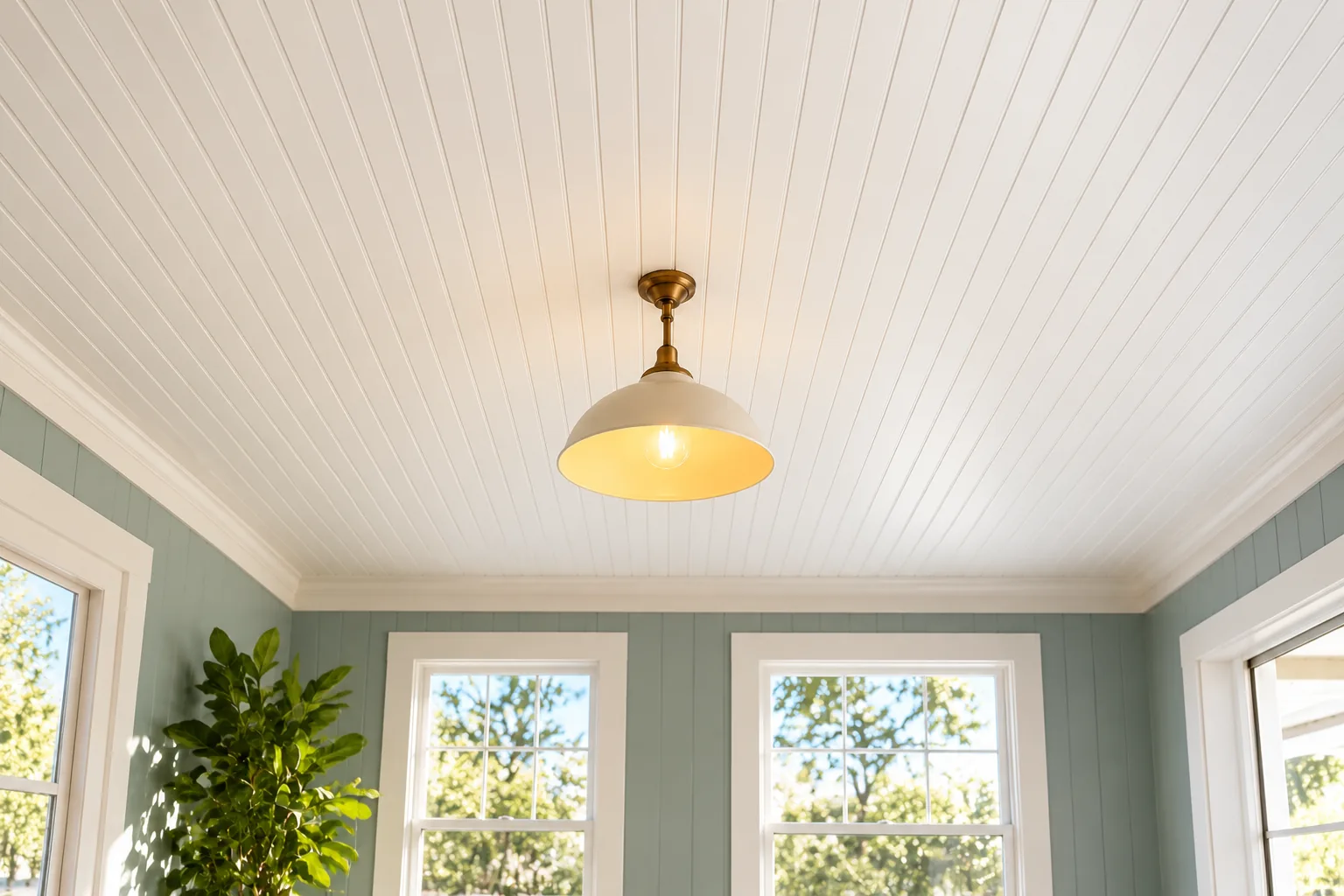
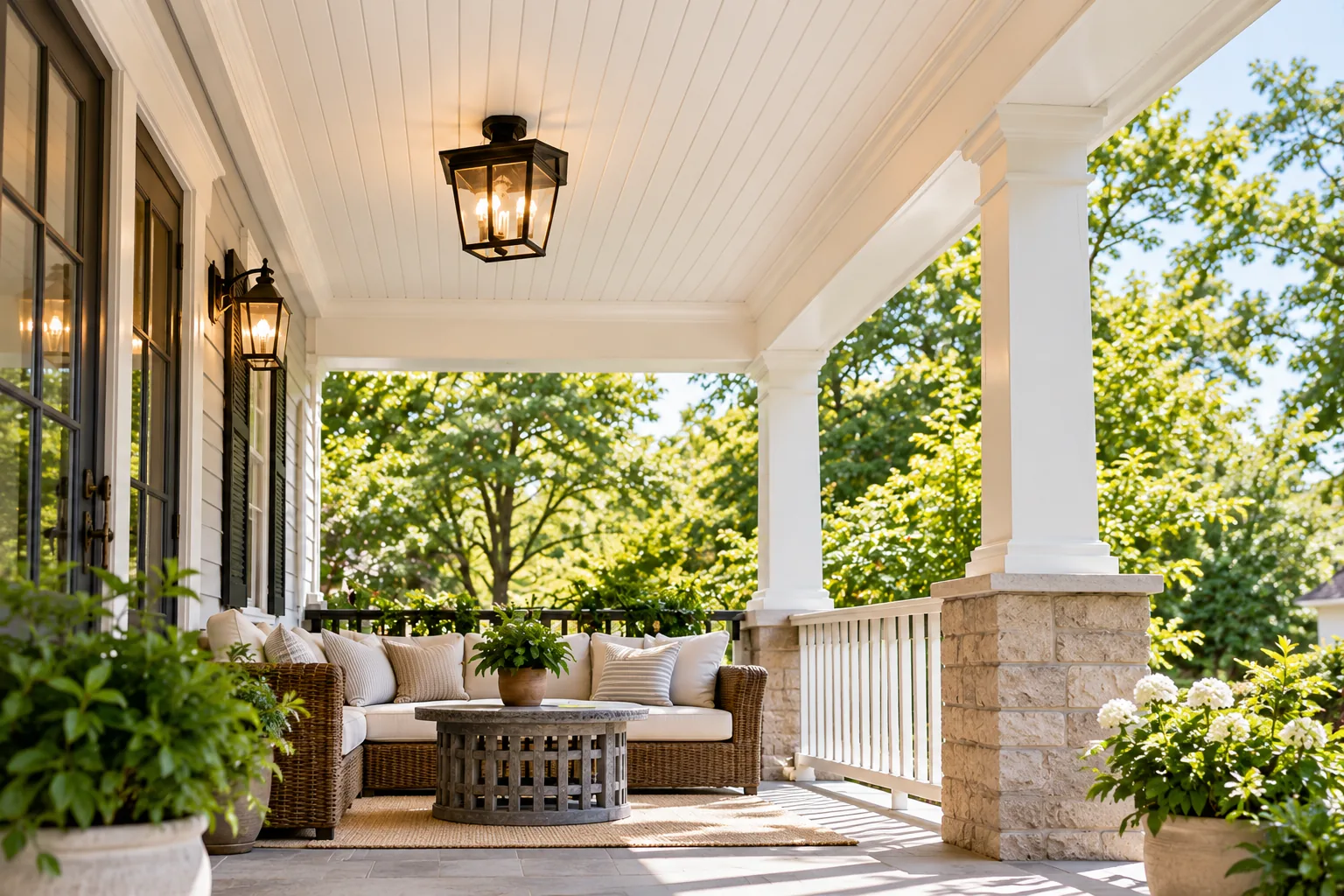
“Exterior beadboard panels” can mean a sheltered porch ceiling, a soffit, a weather-protected wall, or siding exposed to direct rain. Those are different applications. A product documented for a porch ceiling is not automatically suitable as siding, and a wind-uplift statement does not describe a complete rain-management wall assembly.
Quick answer: Match the exact product and grade to the exposure the manufacturer documents. Verify the approved application, framing, fasteners, gaps, ventilation, finish, and warranty. If the wall will receive direct or wind-driven rain, use a product whose instructions explicitly cover that siding assembly; do not substitute a beadboard sold for porch ceilings or weather-protected locations.
Affiliate disclosure: As an Amazon Associate, we may earn from qualifying purchases. This Amazon search for exterior beadboard panels is only a search and does not establish weather rating, siding approval, availability, or product compatibility.
On this page
- Start with the exposure, not the word “exterior”
- What the manufacturer documents
- A product and exposure comparison
- Pre-purchase checklist
- Frequently asked questions
Start with the exposure, not the word “exterior”
A covered porch ceiling may be protected from much of the direct weather while still needing ventilation, movement allowance, appropriate fasteners, and a defined substrate. Siding has a different job: the complete assembly must manage water and meet the product’s exposure and installation requirements. A beadboard panel’s appearance or material alone does not tell you whether it is approved for that assembly.
Before comparing exterior beadboard panels, describe the exact location: porch ceiling, soffit, weather-protected wall, or wall exposed to rain and sun. Include coastal or high-wind conditions, proximity to ground, ventilation, and the finish plan when asking the manufacturer. Then use the exact product page, installation guide, and warranty for the model you intend to buy.
What the manufacturer documents
The captured manufacturer information distinguishes several named products and uses. AZEK describes its E & CB Beadboard as reversible, with an edge-and-center bead on one side and a V-groove on the other, and identifies wainscoting and porch ceilings as applications. It also states UL 580 Class 90 wind-gust uplift resistance. That is a product statement; by itself it does not establish rain-management performance for an exterior wall assembly. Review AZEK’s product information and the Alpine Collection installation guide, which says its outlined applications are the only ones currently recommended for that product.
Westlake’s TruExterior Beadboard page describes porch ceilings and soffits as intended uses, while its December 2024 installation guide explicitly says the beadboard is not intended for siding. The guide gives product-specific framing, fastener, and ventilation directions for its soffit and porch-ceiling use. Do not turn a manufacturer claim about low water absorbance or dimensional stability into a claim that the product is a waterproof siding assembly. See the product page and installation guide.
Georgia-Pacific describes its Ply-Bead panels for weather-protected ceiling, soffit, and wall applications. Its product page identifies the captured 11/32-inch CAT product as Exposure 1 and defines that as suitable for uses not permanently exposed to weather. The installation instructions separately cover protected exterior porch ceilings and soffits and specify nonstaining fasteners. A general statement about exterior-grade plywood does not override the named panel’s Exposure 1 classification. Read the Ply-Bead product page and installation and finishing instructions.
A product and exposure comparison
| Named product/document | Captured application boundary | What to verify next |
|---|---|---|
| AZEK Alpine Beadboard | For the guide’s covered soffit/porch-ceiling section, it specifies rafters no more than 12 inches on center or added blocking, perpendicular orientation, and a 1/4-inch perimeter movement gap. | Confirm the exact Alpine product and guide application; follow its current fastening and movement details. These figures apply to the named guide. |
| AZEK E & CB Beadboard | Manufacturer lists wainscoting and porch ceilings and states UL 580 Class 90 wind-gust uplift resistance. | Ask what the exact product documentation says about your location and full assembly; uplift resistance alone is not rain protection. |
| VERSATEX beadboard | Contractor handbook allows spanned uses such as soffits and ceilings and says it must not be used in load-bearing applications. | Use its thickness-specific support, fastening, movement-gap, and ventilation directions for the exact profile. |
| TruExterior Beadboard | The December 2024 guide limits exterior use to soffits and porch ceilings and says it is not intended for siding. | Do not specify it for siding based on appearance or another product’s claim; follow its ceiling/soffit instructions. |
| Georgia-Pacific Ply-Bead, 11/32-inch CAT | Product page says weather-protected ceiling, soffit, and wall uses; captured panel is Exposure 1, not permanently exposed to weather. | Check the exact grade and panel stamp, exposure, finish, fasteners, and intended location. Retailer wording is not a substitute for manufacturer specification. |
One captured Home Depot listing for Ply-Bead contains conflicting wording: it refers to weather-protected porch or soffit use, displays “not for exterior use,” and has a title that includes “Plywood Siding.” Resolve that ambiguity using the exact panel stamp and current Georgia-Pacific specification; do not use a retailer title or a Q&A response to override the manufacturer’s product classification. See the captured retailer listing.
Pre-purchase checklist
- Exact manufacturer, model, profile, grade, thickness, and panel stamp: ______
- Intended location: porch ceiling / soffit / protected wall / siding: ______
- Manufacturer explicitly approves this product for that exposure: yes / no / unclear
- Required framing or substrate, maximum support spacing, and orientation: ______
- Fastener type, fastening pattern, movement gaps, and end support: ______
- Ventilation or water-management requirements for the assembly: ______
- Required primer, paint, or finish and warranty conditions: ______
- Current installation guide and warranty revision saved: yes / no
- Local code, wind, and exposure requirements checked with qualified sources: yes / no
If any key field is unclear, send the manufacturer the exact model, panel stamp, and proposed location and request written confirmation. Avoid ordering based on a broad phrase such as “exterior grade” when the specific beadboard panel page gives a narrower exposure limit.
Frequently asked questions
Can exterior beadboard be used as siding?
Only if the exact product documentation explicitly supports that siding application and supplies the relevant assembly requirements. TruExterior Beadboard’s captured installation guide says it is not intended for siding. Other products have their own limits; a porch-ceiling use or wind-uplift statement does not automatically establish siding approval.
Is a porch-ceiling panel waterproof?
The documents reviewed here do not justify that conclusion. Porch ceilings and soffits are named applications for some products, but use conditions, ventilation, finish, and exposure limits still apply. A panel attribute such as low water absorbance or wind-uplift resistance does not by itself make a complete assembly waterproof.
What does Exposure 1 mean for Ply-Bead?
Georgia-Pacific’s product page describes its captured 11/32-inch CAT Ply-Bead as Exposure 1 and defines the category as suitable for uses that are not permanently exposed to weather. Confirm the exact grade and panel stamp, then use the current product guide for the proposed location.
Conclusion
For exterior beadboard panels, decide the exposure first and match it to the exact manufacturer-approved application. Sheltered porch ceilings, soffits, weather-protected walls, and direct-exposure siding are not interchangeable. Verify the model, panel grade, framing, fasteners, gaps, ventilation, finish, and warranty before purchase; if siding approval is not explicit, do not assume it.
Sources: Manufacturer product pages and installation documents are cited by claim above. Retailer ambiguity is identified as such. No product was installed or tested for this article.